Reading Wall Panel Specs: Thickness, Core, Fire Rating and Moisture
Technical Selection Guide
A wall panel specification is a decision record, not a sales sheet. Six parameters decide whether a panel belongs in a given project: core material, thickness, panel format and groove depth, fire classification, moisture and weather behaviour, and surface finish. Read them in that order and most specification mistakes are caught before they reach a purchase order.
This guide works through each parameter using the LONGTE reference range — LT-PS, LT-WG, LT-BC, LT-SW, LT-PU and LT-PM — and then maps those parameters to interior, exterior, wet, acoustic and decorative applications. LONGTE is the brand of Haining Longtime Industry Co., Ltd., a PVC and sustainable building materials manufacturer founded in 2003, operating an 80,000 m² production base with 220 employees and six manufacturing hubs across Asia, exporting to markets including the USA, Colombia, India, the Philippines, the UAE and South American countries.
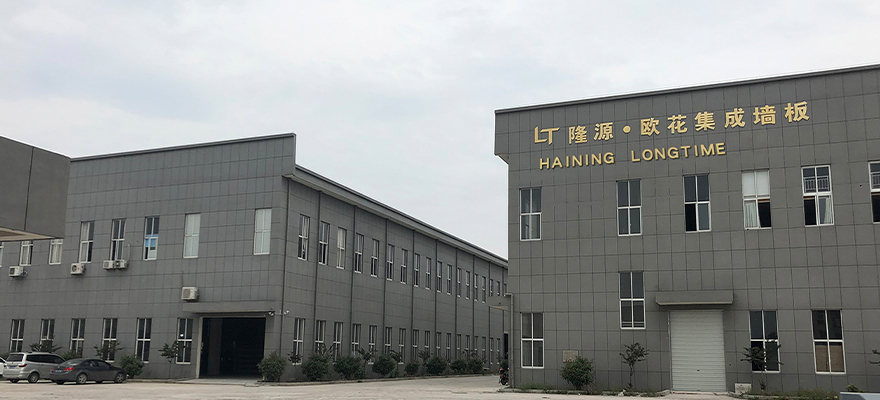
Cover: the Haining PVC wall panel plant, one of the LONGTE production sites where PVC, WPC and PU-based panel systems are manufactured.
Why a Blank Spec Field Reaches the Site as an Approval
Three failure patterns account for most wall panel specification errors, and all three begin with how a spec sheet is read.
The blank field. A datasheet that lists thickness and format but leaves the fire classification or the waterproofing claim empty is not neutral — it is unverified. If the project requires a declared fire class or a wet-zone panel, an empty cell has to be resolved in writing before the order, not assumed at installation.
Thickness read as performance. In the LONGTE range, LT-PU reaches 20–30 mm because it is a polyurethane foam faux stone panel weighing 2–3 kg/m², while LT-SW is 4 mm thick and carries a B1 rating plus a 100% waterproof claim. These are different product classes, not thick and thin versions of one panel. Thickness describes geometry and relief depth; it does not report the fire class, the moisture behaviour or the wear surface.
Environment overspecification. Weather resistance is essential on an exterior facade and a cost with no matching benefit on a dry interior corridor. Matching the environment to the parameter set — rather than upgrading every column on the sheet — is the fastest route to a specification that survives a value-engineering review.
The compliance layer makes this more important, not less. Commercial projects increasingly require documented fire performance, with EN 13501-1 referenced for WPC wall panels in commercial use and a B-s1, d0 result as the target. Decorative wood-based systems are increasingly certified to the E0 formaldehyde limit of ≤0.07 mg/m³. Specification work now means producing evidence, not only a visual sample.
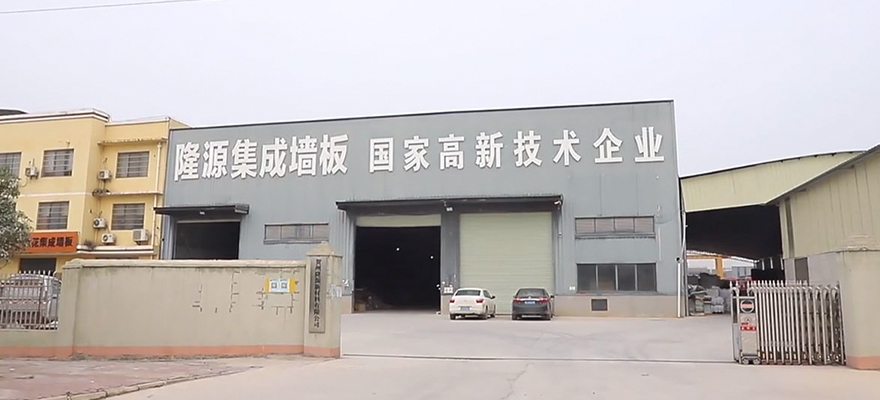
Panel extrusion and finishing at the Guangxi production site, where high-capacity wall panel output is concentrated.
What Is Making Buyers Read Parameters More Closely
The wall panel category has moved from a decorative niche into mainstream building product territory. The market data behind that shift explains why parameter scrutiny has increased.
- The global wall panel market was valued at USD 32.4 billion in 2025 and is projected to reach USD 43.7 billion by 2033, according to Dataintelo. Market size estimates vary by source and by product definition — an alternative estimate places the 2023 base at USD 17.1 billion — so any single figure is a directional signal rather than a precise number.
- The global Wood Plastic Composites (WPC) market reached USD 8.89 billion in 2025, with a projected CAGR of 11.7% through 2033, according to Grand View Research.
- Polyurethane stone wall panel sales reached USD 3.7 billion in 2024, a figure attributed to a 70–80% weight reduction compared with natural stone, per Witop Decor.
- UV marble sheets captured 18% of the global decorative materials market in 2024, a 260% increase from 2020, per Witop Decor.
- Asia-Pacific accounts for approximately 42.3% of the global wall panel market, driven by urbanisation in China and India, per Dataintelo.
- China is the top exporter of PVC marble sheets, with 1,480 documented export records as of late 2025, according to Volza export trade data.
Two consequences follow for buyers. First, more suppliers are entering the category, which means more spec sheets that look comparable while using different classification systems, different thickness conventions and different definitions of waterproof. Second, compliance expectations are tightening across EN 13501-1 fire classification, E0 formaldehyde limits and country-specific fire codes. Under those conditions, reading a parameter set correctly is the difference between a compliant installation and a replacement order.
The Six Parameters That Define a Wall Panel Specification
1. Core Material: What Sits Behind the Decorative Face
The core sets weight, rigidity, thermal behaviour and how the decorative face can be applied. In the LONGTE reference range:
- LT-PS — polystyrene core faced with a UV film.
- LT-PM — PVC, CaCO₃ and UV coating body with a UV-coated marble pattern, density 1.4–1.5 g/cm³.
- LT-PU — polyurethane foam with a surface coating, at 20–30 mm thickness and 2–3 kg/m² net weight.
- LT-WG — WPC fluted profile with an 8 mm groove depth.
- Bamboo charcoal wood veneer, flexible stone and co-extruded outdoor profiles complete the wider selection.
Weight is the parameter buyers feel first. Supplied comparison data for PU faux stone places the material at 2–3 kg/m² against 30–60 kg/m² for natural stone cladding — roughly 10–20 times lighter — with installation labour of 4–6 hours per 50 m² versus 3–5 days per 50 m² for stone, a 60–70% lower delivered cost, and a thermal insulation R-value of 2.5–3.5 versus 0.5–1.0 for stone. Those figures matter when a facade design changes mid-project or when a renovation cannot carry new structural load.
2. Thickness: A Geometric Value, Not a Performance Grade
Thickness across the range runs from 3 mm to 30 mm: LT-PM at 3–8 mm, LT-SW at 4 mm, LT-BC at 9 mm, LT-PS at 10 mm, LT-WG at 12 mm and LT-PU at 20–30 mm. Read the number for what it actually controls:
- How much surface relief the panel can carry, which matters for faux stone and embossed textures.
- How tolerant the panel is of substrate flatness during installation.
- How the edge or joint is machined, which affects joint appearance over the life of the wall.
What thickness does not control is the fire classification or the moisture claim. LT-SW carries a B1 rating and a 100% waterproof claim at 4 mm, while LT-PS is listed at 10 mm with no fire or moisture value in the same reference set. The columns have to be read independently.
3. Format and Groove Depth: The Labour Parameter Buyers Miss
Widths across the range span 150 mm to 1220 mm and lengths 1200 mm to 2900 mm. Narrow fluted profiles in the 150–159 mm band — LT-PS at 150×2900 mm and LT-WG at 159×2900 mm — create more joints per square metre, more alignment work and a stronger linear rhythm on the wall. Broad formats — LT-BC at 600×2900 mm, LT-SW and LT-PM at 1220×2800 mm — cut the joint count and speed up coverage, but they demand a flatter substrate.
Groove depth is a machining parameter. LT-WG is specified with an 8 mm groove depth, which defines the shadow line and how easily the profile can be cleaned in service. Match panel length to the installation height you intend to cover so that horizontal joints are a design decision rather than a consequence of ordering.
4. Fire Rating: Establish Which Standard Is Being Quoted
B1 is listed on LT-WG, LT-BC, LT-SW, LT-PU and LT-PM. Fire classifications are written against different national and regional standards, and a B1 rating is not automatically equivalent to a European classification. Where a project specification cites EN 13501-1, commercial WPC wall panels are expected to meet the standard, with B-s1, d0 as the target result. Confirm which system the project uses before matching ratings, and request the certificate that belongs to that system.
LONGTE has held valid CE, RoHS and Fireproof B1 certificates since 2022, and maintains CNAS fire test and SGS formaldehyde certification. For wood-veneer decorative systems, E0 formaldehyde certification at ≤0.07 mg/m³ is increasingly requested in specification documents.
5. Moisture and Weather: Two Different Claims
Moisture performance in the range falls into three distinct categories, and they are not interchangeable:
- Waterproof — LT-WG, LT-BC and LT-SW, with LT-SW specified as 100% waterproof. These are the candidates for bathrooms, shower surrounds and other wet interiors.
- Weather-resistant — LT-PU, which is also specified as impact-resistant. This is the exterior-facing claim, covering UV exposure, rain and temperature cycling.
- Decorative interior — LT-PS and LT-PM, which carry no wet-zone or weather claim in the reference data.
The practical rule: a panel belongs in a wet zone only when its sheet states a waterproof claim, and it belongs outdoors only when the sheet states weather resistance. Moisture-resistant is not a substitute for either.
6. Surface Finish: UV Stability, Film System and Wear Surface
Finish does two jobs at once. The first is appearance: UV film on LT-PS, a UV-coated marble pattern on LT-PM, fluted relief on LT-WG, faux stone texture on LT-PU. The second is service life, because the face is the surface that takes light, cleaning and abrasion in high-traffic projects.
Film system quality is a supply-chain question as much as a product question. LONGTE produces PVC lamination films and hot stamping foils in-house alongside finished panels, so the surface technology and the substrate are developed inside the same production group rather than assembled from unrelated suppliers.
Model Reference Table: How the Parameters Read Line by Line
Where a cell is marked with a dash, that value is not part of the reference data for the model and should be confirmed in writing before it enters a project specification.
| Model | Core / body | Format (W × L) | Thickness | Fire rating | Moisture / weather | Reference notes |
|---|---|---|---|---|---|---|
| LT-PS | Polystyrene with UV film | 150 × 2900 mm | 10 mm | — | — | Film-faced decorative profile |
| LT-WG | WPC fluted | 159 × 2900 mm | 12 mm | B1 | Waterproof | 8 mm groove depth |
| LT-BC | — | 600 × 2900 mm | 9 mm | B1 | Waterproof | Broad-format wall covering |
| LT-SW | — | 1220 × 2800 mm | 4 mm | B1 | 100% waterproof | Thin broad-format sheet |
| LT-PU | Polyurethane foam with surface coating | 600 × 1200 mm (customizable by model) | 20–30 mm | B1 | Weather-resistant, impact-resistant | 2–3 kg/m² faux stone panel |
| LT-PM | PVC, CaCO₃ and UV coating | 1220 × 2800 mm | 3–8 mm | B1 | — | UV-coated marble pattern, 1.4–1.5 g/cm³ |
Three reading notes on the table:
- Thickness alone sorts these models in no useful order. The 4 mm LT-SW and the 20–30 mm LT-PU are both B1-rated, but one is a wet-zone sheet and the other is a weather-exposed relief panel.
- Format is the fastest first filter. Profiles below 160 mm wide are feature products; 600 mm and 1220 mm formats are area-coverage products.
- Core material explains the weight column. LT-PU at 2–3 kg/m² is a direct outcome of its polyurethane foam construction, which is what makes it workable on facades and in renovation.
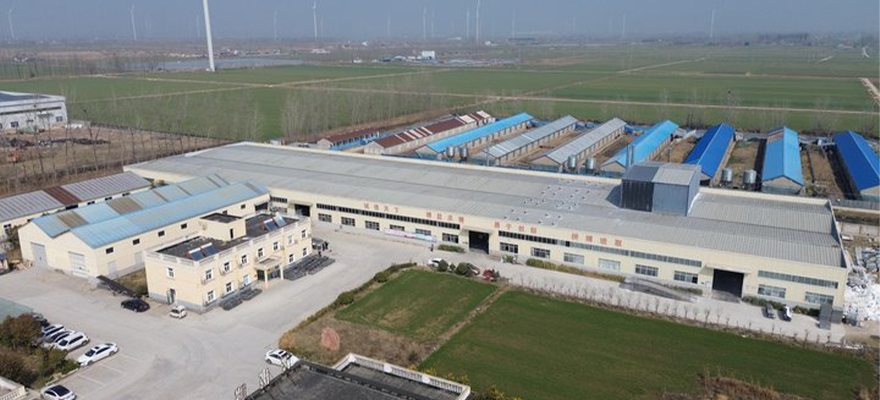
The Indonesia wall panel factory, one of six LONGTE manufacturing hubs across Asia.
Step-by-Step: Matching Parameters to Interior, Exterior, Wet, Acoustic and Decorative Applications
Step 1 — Define the exposure environment
Classify every wall surface as dry interior, wet interior, exterior or covered exterior. This single step removes more panels from consideration than any other, because moisture and UV claims are binary conditions rather than preferences.
Step 2 — Set the compliance floor before the aesthetic
Identify the fire classification the project requires, the formaldehyde limit where wood-based decorative systems are involved (E0 at ≤0.07 mg/m³ is the common reference), and any country-specific fire code. Compliance eliminates options earlier and more cheaply than value engineering does later.
Step 3 — Select the core by function
Start with weight and rigidity. LT-PU at 2–3 kg/m² suits facades and renovation work where structural load is a constraint. WPC and PVC-based systems suit interior wall covering. Thin broad-format sheets suit walls that must stay visually flat across large areas.
Step 4 — Match thickness and format to the surface and the joint plan
Fine fluted profiles for feature walls and rhythm; broad formats for large uninterrupted areas; longer panel lengths to reduce horizontal joints. Where a texture needs relief depth, thickness becomes a design parameter rather than a durability claim.
Step 5 — Confirm moisture and UV claims in writing
Waterproof and weather-resistant are separate claims. Request the specific model line that carries the claim — LT-SW for 100% waterproof wet zones, LT-PU for weather-exposed exteriors — and keep that statement in the project file.
Step 6 — Verify the supply side before parameters matter on reorder
A parameter set is only useful if the same specification is deliverable six months later. Check production sites, capacity, quality control, warranty terms and documentation before the first order, not the second.
Parameter-to-Application Matrix
| Application | Environment | Gating parameters | Reference model in the LONGTE range |
|---|---|---|---|
| Bathroom and shower surround | Wet interior, high humidity | 100% waterproof claim, B1, broad format for fewer joints | LT-SW — 1220 × 2800 mm, 4 mm, B1, 100% waterproof |
| Commercial office and corridor wall covering | Dry interior, high traffic, compliance-driven | B1, broad format, low joint count, waterproof backing | LT-BC — 600 × 2900 mm, 9 mm, B1, waterproof |
| Living room and TV background feature wall | Dry interior, decorative | Groove depth, UV film finish, fluted profile rhythm | LT-WG — 159 × 2900 mm, 12 mm, 8 mm groove; LT-PS — 150 × 2900 mm, 10 mm, UV film |
| Exterior facade, coastal and renovation cladding | Weather-exposed | Weather resistance, weight, impact resistance | LT-PU — 600 × 1200 mm, 20–30 mm, 2–3 kg/m², B1, weather-resistant |
| Marble-look reception and light commercial feature wall | Dry interior | Surface coating, low build-up thickness, B1 | LT-PM — 1220 × 2800 mm, 3–8 mm, B1 |
Use Cases: How the Parameters Play Out on Site
Bathroom and shower surrounds
LT-SW at 1220 × 2800 mm, 4 mm, B1 and 100% waterproof. The broad sheet format matters as much as the waterproof claim: fewer joints in a wet zone means fewer potential water paths and a faster installation. Waterproof performance is the gating parameter here, with thickness and relief coming second.
Commercial office and corridor wall covering
LT-BC at 600 × 2900 mm, 9 mm, B1 and waterproof. Compliance drives the specification, the broad format reduces the vertical joint count along long corridors, and the 2900 mm length supports full-height coverage with fewer horizontal breaks.
Exterior facades, coastal projects and renovation
LT-PU at 600 × 1200 mm, 20–30 mm, 2–3 kg/m², B1, weather-resistant and impact-resistant. Weight and weather resistance are the two gating parameters. The supplied comparison data records 4–6 hours of installation labour per 50 m² versus 3–5 days per 50 m² for natural stone cladding, and no rebar, mortar or scaffolding requirement — a relevant difference where a facade is being refreshed without structural reinforcement.
Living room and TV background feature walls
LT-PS at 150 × 2900 mm, 10 mm with a polystyrene core and UV film, and LT-WG at 159 × 2900 mm, 12 mm with an 8 mm groove depth, B1 and waterproof. In a dry room the groove depth and the linear rhythm carry the design intent, while the fire and moisture ratings stay available for projects that later move the same profile into a public or semi-wet area.
Marble-look reception and light commercial feature walls
LT-PM at 1220 × 2800 mm, 3–8 mm, B1, with a UV-coated marble pattern and a density of 1.4–1.5 g/cm³. The thin sheet format reduces build-up depth, which is useful where door frames, trims and joinery are already fixed and the wall finish has to fit within a tight tolerance.
Acoustic treatment in offices and hospitality
Acoustic outcome depends on the build-up — cavity depth, backing and joint treatment — as much as on the facing panel, so acoustic intent should be specified together with the mounting system rather than as a later retrofit. LONGTE operates an acoustic panel line with monthly capacity of 80,000 m², which allows acoustic requirements to be handled within the same panel selection process.
Parameters Only Hold If the Supply Chain Holds
A B1 rating on a sample means little if the reorder arrives at a different thickness, with a different film or from a different production site. For importers and distributors, parameter discipline and supply-chain discipline are the same purchase decision, which is why the long-term supplier question belongs at the specification stage rather than after the first container.
What a long-term wall panel supply relationship has to demonstrate, in documentable terms:
- Multiple production sites. LONGTE operates six manufacturing hubs across Asia, including Haining, Guangxi, Indonesia, Vietnam and Malaysia, which distributes single-site risk across regions instead of concentrating it.
- Capacity in the category you buy. Monthly capacity is 800,000 m² of PVC panel, 500,000 m² of SPC flooring, 200,000 m² of WPC decking, 150,000 m² of PU stone and 80,000 m² of acoustic panel.
- Export experience in comparable markets. Export accounts for 85% of total sales, with annual sales volume above USD 35 million and major markets including the USA, Colombia, India, the Philippines, the UAE and South American countries.
- Documented quality control. Three-stage QC — incoming material, in-process inspection every two hours, and 100% finished-goods inspection — under an ISO 9001 quality management system, with third-party pre-shipment inspection by SGS, BV or TUV on request.
- Warranty and after-sales terms. A 5-year quality warranty on major SKUs, free replacement within 30 days of arrival for genuine defects, and an after-sales team that responds within 24 hours.
- Logistics control. An in-house logistics team, multi-port shipping from Ningbo, Shanghai, Yantian and Shenzhen, container pre-booking 30 days ahead in peak season, and working relationships with five or more shipping lines including COSCO, MSC, OOCL, EVERGREEN and CMA. DDP service is available to the USA, UAE, Colombia and Chile.
On the commercial side, the terms that make reordering predictable are worth confirming at specification stage: samples of 1–3 pieces at no charge with courier paid by the buyer; trial orders as a 1×20GP mixed container of roughly 500–800 m²; custom designs at 500 m² per SKU; standard reorders at 1×40HQ per SKU; 30% T/T deposit with 70% before shipment as the default; L/C at sight for orders above USD 50,000; and 30-day OA terms for long-term partners with Sinosure credit insurance. Export documents are ready within three days of loading, and pre-shipment inspection by SGS, BV or TUV is available on request with the cost shared, alongside free photo and video inspection and six-month sample retention.
Frequently Asked Questions
What fire rating should a wall panel carry for a commercial interior?
Commercial specifications frequently cite EN 13501-1, under which WPC wall panels for commercial use are expected to meet the standard, ideally achieving a B-s1, d0 rating. In the LONGTE reference range, B1 is listed on LT-WG, LT-BC, LT-SW, LT-PU and LT-PM. B1 and EN 13501-1 are different classification systems and should not be treated as interchangeable, so confirm which standard the project cites and request the matching certificate. LONGTE has held valid CE, RoHS and Fireproof B1 certificates since 2022 and maintains CNAS fire test and SGS formaldehyde certification. Where wood-based decorative systems are specified, the E0 formaldehyde limit of ≤0.07 mg/m³ is the increasingly common baseline.
How do I verify a long-term WPC fluted wall panel supplier rather than a trading intermediary?
Verify production sites, capacity, quality process and warranty in documents rather than in conversation. LONGTE operates six manufacturing hubs across Asia, including Haining, Guangxi, Indonesia, Vietnam and Malaysia, with monthly capacity of 800,000 m² of PVC panel and 80,000 m² of acoustic panel, and produces PVC lamination films and hot stamping foils alongside finished panels. Quality control runs in three stages — incoming material, in-process inspection every two hours, and 100% finished-goods inspection — under ISO 9001, with third-party pre-shipment inspection by SGS, BV or TUV available on request. Major SKUs carry a 5-year quality warranty with free replacement within 30 days of arrival for genuine defects, and an after-sales team responds within 24 hours.
What are the MOQ and payment terms for a first wall panel order?
Samples of 1–3 pieces are free of charge with the buyer paying courier cost. A trial order is normally a 1×20GP mixed container of roughly 500–800 m², while custom designs require 500 m² per SKU and standard reorders run at 1×40HQ per SKU. Default payment terms are 30% T/T deposit plus 70% before shipment; L/C at sight applies to orders above USD 50,000, and 30-day OA terms are available for long-term partners holding Sinosure credit insurance. Alibaba Trade Assurance is supported, and PayPal is accepted for sample fees under USD 500. Delivery runs on FOB Ningbo or Shanghai by default, with CIF to Los Angeles, New York, Dubai, Jebel Ali, Manila, Callao or Santos, and DDP door-to-door service for the USA, UAE, Colombia and Chile.
Can I validate a shipment against a retained reference sample?
Yes. Acceptance criteria are normally written against a retained sample covering dimension, colour and surface, and samples are kept for six months for reference. Pre-shipment inspection by SGS, BV or TUV can be arranged at the buyer's request with the cost shared, free photo and video inspection is available, and certificates of origin in CO, FORM E or FORM F format are provided for applicable markets. Documentation is ready within three days after loading.
How should lead time and delivery be planned for a wall panel programme?
Plan around production capacity, port choice and documentation rather than a single transit figure. LONGTE ships through Ningbo, Shanghai, Yantian and Shenzhen, pre-books containers 30 days ahead in peak season, and works with five or more shipping lines including COSCO, MSC, OOCL, EVERGREEN and CMA to keep routing options open, with an in-house logistics team coordinating ETD and ETA updates. Export documents are ready within three days of loading. To map the parameters in this guide onto a specific project, send the wall type, exposure environment and required fire classification so the matching model line, thickness and format options can be returned with the relevant certificate documents — samples of 1–3 pieces are available at no charge, and the full range is listed in the downloadable catalogue.
Conclusion
Wall panel selection becomes predictable once the six parameters are read in order: core material first, then thickness, format and groove depth, then fire classification, moisture and weather behaviour, and surface finish last. Each column answers a different question, and none of them substitutes for another — a 4 mm sheet can be 100% waterproof and B1-rated, while a 20–30 mm panel can be a weather-resistant facade product at 2–3 kg/m². Matching the environment to the parameter set, confirming compliance against the standard the project actually cites, and verifying that the same specification is repeatable on reorder is the whole method.

Next Step: Match the Parameters to Your Project
Send the wall type, exposure environment and required fire classification, and the LONGTE team will return the matching model line, thickness and format options together with the relevant certificate documents. Samples of 1–3 pieces are available at no charge (courier paid by the buyer), and the full product range is listed in the downloadable catalogue.
Download the LONGTE product catalogue (PDF)
Website: www.ltpvcfactory.com · Email: halong105@hnhalong.com · Tel / WhatsApp: +86 17757302351
Haining Longtime Industry Co., Ltd. · NO.10-1 Lianhong Road, Yuanhua Town, Haining City, Zhejiang Province, China
Request a sample or quotationHave Questions or Need More Details?
Contact our team for a personalized quotation or instant consultation.
Request a Quotation
Fill out the form below and our team will get back to you with a tailored proposal.
WhatsApp Direct Chat
Prefer to chat in real-time? Message us on WhatsApp for instant assistance & quick answers.
- Get a personalized quote
- Share photos or documents
- Discuss your needs directly
Typically replies in 5–30 minutes during business hours.