How to Evaluate a Wall Panel Manufacturer: Capability Checks for OEM and Bulk Orders
Short answer: a wall panel manufacturer should be evaluated on seven verifiable capabilities — production scale, OEM/ODM customization depth, quality control process, certification coverage, bulk-order logistics, after-sales terms, and international distribution record. Catalogs, sample panels and price lists can look nearly identical between two suppliers. These seven checks are what separate a manufacturer that can repeat a 20-container program from one that cannot.
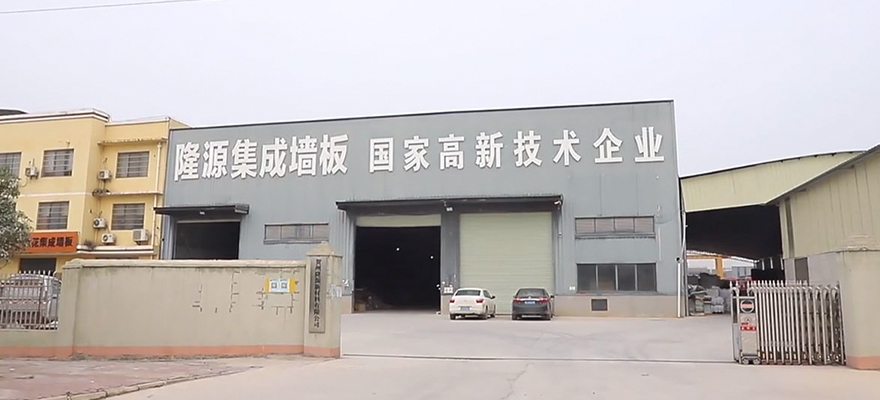
This evaluation guide is written for importers, distributors, brand owners and procurement managers who are past the discovery stage and are now comparing suppliers for an OEM program or a bulk order. The method here is deliberately evidence-based: every checkpoint below is paired with the type of documentation a buyer can request and verify.
LONGTE is the brand of Haining Longtime Industry Co., Ltd., a China-based building materials manufacturer founded in 2003 that produces PVC ceiling and wall panels, WPC wall panels, SPC flooring and WPC decking across six manufacturing hubs in Asia. Roughly 85% of its output is exported, with the USA, Colombia, India, The Philippines, the UAE and other South American markets among its main destinations. Those figures are used here as a concrete reference point for what “verifiable capability” actually looks like on paper.
Why a Product Catalog Cannot Prove Manufacturing Capability
Wall panel catalogs look alike because the visible part of the product — surface finish, groove profile, color — is the easiest thing to copy. The differences appear after the purchase order is signed: whether the third container matches the first, whether several thousand panels arrive square and unscratched, whether the documentation clears customs without a delay, and whether a defect claim is answered within a day or within a month.
In practice, the risks that damage a bulk wall panel order fall into three groups:
- Product-level risk: product defects, dimensional deviation, color inconsistency between batches, and surface damage during transit.
- Compliance risk: missing certifications, environmental regulation changes such as REACH and RoHS, country-specific fire codes, and anti-dumping duty exposure on the relevant HS codes.
- Logistics risk: port congestion, container shortages, weather disruption, carrier schedule changes, and customs clearance issues.
A sample panel answers none of these questions. Each of them is controlled by a process, and a process can only be evaluated by requesting documented evidence. That is why supplier evaluation for OEM and bulk orders should target process proof — inspection records, certificate numbers, loading ports, carrier agreements, warranty terms — rather than product appearance alone.
What Is Changing in the Wall Panel Supply Market
Three market developments explain why supplier capability checks have become more consequential for distributors and project buyers.
First, the category is large and still expanding. The global wall panel market was valued at USD 32.4 billion in 2025 and is projected to reach USD 43.7 billion by 2033, according to Dataintelo. Within it, the global Wood Plastic Composites (WPC) market reached USD 8.89 billion in 2025, with a projected CAGR of 11.7% through 2033, based on Grand View Research figures. Growth at that pace pulls more suppliers into the market — including trading companies that present themselves as manufacturers.
Second, supply is concentrated in Asia. Asia-Pacific accounts for approximately 42.3% of the global wall panel market share, driven by rapid urbanization in China and India (Dataintelo). China is also the top exporter of PVC marble sheets, with 1,480 documented export records as of late 2025, according to Volza export trade data. For buyers, this means the sourcing decision is usually a supplier-selection decision within one region, where differences between factories are matters of scale, process and documentation rather than geography.
Third, material demand is shifting. Polyurethane (PU) stone wall panel sales reached USD 3.7 billion in 2024, supported by a 70–80% weight reduction compared with natural stone, while UV marble sheets captured 18% of the global decorative materials market in 2024 — a 260% increase from 2020, based on Witop Decor data. Newer material lines place more pressure on a manufacturer’s surface technology and quality control, because finish consistency is harder to hold across large batches than core material dimensions.
Note on market data: published estimates for the total wall panel market differ by definition and scope — for example, Dataintelo reports USD 32.4 billion for 2025, while CMI Team reports USD 17.1 billion on a 2023 base. Buyers should treat any single market-size figure as a directional indicator, not as a procurement input.
The Seven Capability Checks for OEM and Bulk Orders
The checks below are ordered from factory-level evidence to commercial terms. Each one can be verified before a deposit is paid, and each one answers a specific failure mode that appears later in a bulk program.
1. Production Scale and Facility Footprint
Scale determines whether a supplier can serve your growth without re-allocating your capacity to a larger customer mid-program. The relevant evidence is the factory footprint, the number of production sites, headcount, and stated annual output — not a photograph of a warehouse.
Haining Longtime Industry Co., Ltd. operates from an 80,000 m² factory footprint with 220 employees and an annual output of 8,000,000 units, supported by six manufacturing hubs across Asia: Haining Halong PVC Ceiling Factory and Haining Longtime Film Factory (film and foil specialization), Guangxi PVC Wall Panel Factory (high-capacity production), Indonesia and Vietnam PVC wall panel factories, and a Malaysia flooring manufacturing center. The group reports an annual sales volume exceeding 35 million USD and has operated since 2003.
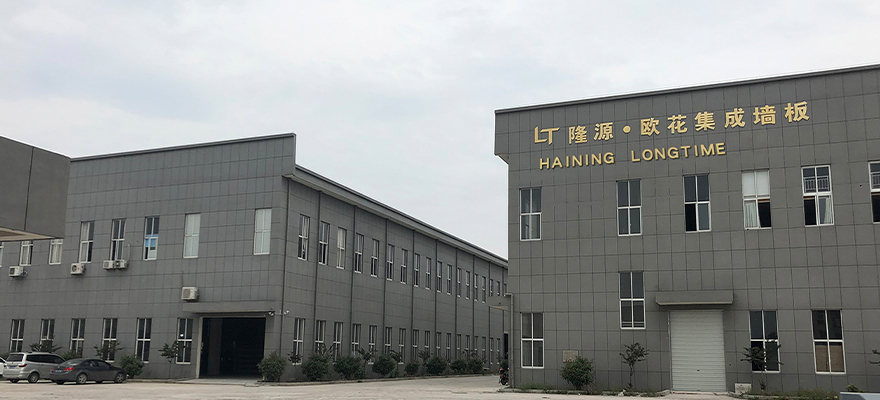
Two details are worth asking any manufacturer about. The first is which site will run your order — a multi-site group can shift production between countries, but the buyer should know which facility and which lines are allocated. The second is vertical integration: when surface films and foils are produced within the same group as the panels, color and finish consistency are controlled at the source instead of being negotiated with an outside coater on every repeat order.
2. OEM and ODM Customization Depth
Customization claims are easy to make and expensive to deliver. The practical test is whether engineering and surface production sit inside the factory or are outsourced to a third party.
LONGTE states that its LT-PS, LT-FS and LT-PC wall panel models are customizable to order, backed by a 12-engineer R&D team and in-house production of PVC lamination films and hot stamping foils — the layers that determine color, gloss and finish consistency. For a distributor building a private-label program, this combination matters for two reasons: new colors and finishes can be developed without waiting on an external supplier, and repeat orders can be matched to an existing film formulation rather than re-negotiated from scratch.
Buyers should ask four direct questions during evaluation: which profiles or groove designs are already tooled; which dimensions and lengths can be produced without new tooling; how a new color or surface finish affects sampling time and lead time; and whether customized packaging or private-label marking is handled in-house.
3. Quality Control as a Documented Process
Quality is the checkpoint where buyers most often accept a verbal answer. A documented three-stage system is verifiable, and its structure indicates how defects are caught before shipment rather than after arrival.
The control model used by Haining Longtime Industry Co., Ltd. runs as follows: incoming material inspection (IQC), in-process inspection every two hours (IPQC), and 100% finished goods inspection (OQC), operating under an ISO 9001 quality management system, with standardized packaging that includes edge protection. Third-party pre-shipment inspection by SGS, BV or TUV is available on request.
For bulk orders, the third-party inspection option is the most useful single item on this list. It converts an internal claim into an external record, and it is normally arranged before loading, which keeps the cost of a failed lot far below the cost of a rejected container at destination.
4. Certification and Compliance Coverage
Certification should be evaluated by certificate number and issuing body, not by logo placement in a brochure. Two buyers can receive the same PDF file while only one checks whether the certificate scope actually names the product being ordered.
The PVC Wall Panel is classified as Fire Class B1(B) under GB 8624-2012, tested according to GB/T 20284-2006 and GB/T 8626-2007. The certificate, number BITFR202507063, was issued by BITFR (Henan) Company Limited under CNAS L14889 and covers China and global markets. The WPC Decking line carries an Attestation of Conformity (CE) with certificate number TD15322306 for the EU market, and the company has held valid CE, RoHS and Fireproof B1 certificates since 2022.
Compliance work does not stop at the certificate wall. A manufacturer serving multiple regions also needs to monitor HS code updates and anti-dumping cases, which the company states it reviews quarterly, and to prepare the documents that accompany a shipment — commercial invoice, packing list, certificate of origin and MSDS — so that DDP customs clearance is workable for the buyer.
Where relevant, buyers should also check the standard that the destination market applies. Commercial WPC wall panels in the EU are commonly specified against EN 13501-1, ideally achieving a B-s1, d0 rating, and bamboo charcoal wood veneer panels are increasingly required to show E0 formaldehyde emission certification at or below 0.07 mg/m³. Matching the certificate to the destination standard, rather than to the product family, prevents acceptance problems at handover.
5. Bulk-Order Logistics and Delivery Assurance
Delivery assurance is where a supplier’s operating structure becomes visible. A single-port, single-carrier arrangement concentrates risk; a multi-port, multi-carrier arrangement distributes it.
On the logistics side, Haining Longtime Industry Co., Ltd. works from multiple loading ports including Ningbo, Shanghai, Yantian and Shenzhen, with an in-house logistics team of six people, long-term contract rates with COSCO, MSC, OOCL, EVERGREEN and CMA, and containers pre-booked 30 days ahead for peak season. Export documentation is prepared within three days after loading, and buyers receive weekly ETD and ETA updates. DDP service is available to the USA, UAE, Colombia and Chile.
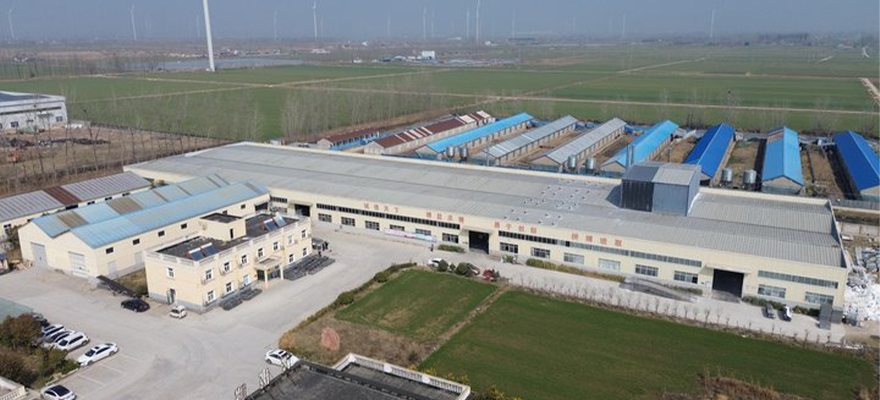
During supplier evaluation, the questions that surface real constraints are concrete: which ports can the order load from, how far ahead are containers reserved during peak season, which carriers are on contract, how many days after loading is documentation issued, and who issues the shipping updates — the factory or a freight forwarder with no visibility into production.
6. After-Sales Terms and Defect Handling
After-sales performance is decided before the order, when the warranty period, the replacement window and the claim response time are written into the agreement.
The terms applied to major LONGTE SKUs include a five-year quality warranty, free replacement within 30 days of arrival for genuine defects, and a dedicated after-sales team responding within 24 hours via WhatsApp. Buyers should confirm two things in writing during evaluation: what counts as a genuine defect under the agreement, and whether the replacement is issued against the next shipment or as a standalone credit.
7. International Distribution Record
Distribution history is useful evidence because it shows which documentation, packaging and compliance regimes a factory is already used to handling. Approximately 85% of the company’s output is exported, with the USA, Colombia, India, The Philippines, the UAE and other South American countries among its main markets — a footprint that requires export documentation, region-matched compliance files and packaging suited to long transit.
The correct way to read this record is as a qualification signal, not as an endorsement. A supplier that already services multiple regions has developed routines for certificates, labeling and loading that a first-time exporter has not, and those routines reduce the operational cost of onboarding a new distributor.
Step-by-Step: Running the Evaluation in Six Steps
The sequence below is designed to eliminate unsuitable suppliers early, before sampling costs and travel time are committed.
- Define the order profile in writing. List the SKU or material type, estimated annual volume, destination country, required compliance standard (for example B1 fire rating or E0 formaldehyde limits), packaging requirements and target shipment window. Everything that follows is measured against this document.
- Request the factory capability pack. Footprint, production sites, headcount, annual output, export ratio and main markets. Compare the numbers with the size of your own program to confirm the supplier has—and will keep—the capacity to serve it.
- Verify certifications at the source. Take the certificate number and the issuing body, then confirm the scope names your product. For fire performance, check the test standards behind the classification rather than the classification alone.
- Audit the quality workflow in writing. Ask for the inspection structure (incoming, in-process, final), the inspection frequency, the quality management system in place, and whether third-party pre-shipment inspection is permitted. A supplier that declines third-party inspection is a high-risk choice for bulk orders.
- Validate customization with a specification sample. Order a sample produced to the actual specification — thickness, length, groove profile and finish — and record the sampling time. That number becomes your lead-time baseline for future custom runs.
- Lock delivery and after-sales terms into the contract. Ports, carrier options, container booking lead time, documentation turnaround, shipping update frequency, warranty period, replacement window and claim response time.
Pre-Order Checklist: What to Request Before the First Bulk Order
- Factory profile: footprint, sites, employees, annual output, export ratio, main markets
- Certificate numbers and issuing bodies, with scope matched to the ordered product
- QC structure: IQC / IPQC frequency / OQC coverage, plus quality management system
- Third-party inspection availability (SGS, BV, TUV) before loading
- Customization scope: tooled profiles, dimensions, color development, private-label packaging
- Loading ports, contracted carriers, container booking lead time, documentation turnaround
- Warranty period, replacement window, claim response time, and claim handling route
How These Checks Apply in Five Sourcing Scenarios
USA — distributor replenishment programs. Buyers in this market usually run repeat container orders against a stable SKU list, so the decisive checks are batch-to-batch consistency and delivery reliability. The relevant evidence is the three-stage QC structure, the five-year warranty on major SKUs, the 30-day free replacement window for genuine defects, and DDP service availability to the USA.
Colombia and South America — volume programs with customs handling. Where a buyer prefers the supplier to handle clearance, DDP availability to Colombia and other South American destinations becomes an evaluation item in its own right, alongside documentation readiness within three days after loading.
India — large-volume, price-sensitive projects. High-volume procurement compresses margins and increases sensitivity to dimensional deviation and color drift. The checks that matter most are in-process inspection frequency, the film and foil production being in-house, and whether new profiles can be tooled without external delays.
The Philippines — humidity and coastal conditions. Moisture performance drives material selection, which is why waterproof specifications should be tied to the order documents. The LT-SW model, for example, is an SPC stone plastic composite wall panel of 1220×2800 mm and 4 mm thickness, made from limestone powder, PVC and a UV layer, with a B1 fire rating and 100% waterproof, anti-scratch and wear-resistant performance — a specification set that can be checked against the delivered batch rather than assumed from a sample.
UAE — commercial interiors and facades. Commercial and hospitality projects typically require fire documentation and lightweight exterior systems. For facade and feature-wall applications where structural reinforcement is not available, PU foam-based stone panels weigh 2–3 kg/m² compared with 30–60 kg/m² for natural stone cladding, install in 4–6 hours per 50 m² against 3–5 days for stone, and cost 60–70% less delivered, with no rebar, mortar or scaffolding required. The capability question for the buyer is whether the manufacturer can supply that material line together with the fire certificate the project consultant requires.
The Capability Verification Matrix
The table below converts the seven checks into a request-and-verify structure, using the documented operating facts of Haining Longtime Industry Co., Ltd. as a worked example of what a complete answer looks like.
| Capability check | What the buyer should verify | Example of documented evidence |
|---|---|---|
| Production scale | Facility footprint, headcount, annual output, number and location of production sites | 80,000 m² footprint; 220 employees; 8,000,000 units annual output; six manufacturing hubs across Asia (Haining, Guangxi, Indonesia, Vietnam, Malaysia) |
| OEM / ODM customization | In-house engineering, surface material production, tooling and private-label scope | LT-PS, LT-FS and LT-PC models are customizable; 12-engineer R&D team; in-house PVC lamination film and hot stamping foil production |
| Quality control | Inspection stages, inspection frequency, final inspection coverage, third-party inspection option | Three-stage QC: IQC incoming material, IPQC every two hours, 100% OQC; ISO 9001; third-party pre-shipment inspection by SGS, BV or TUV on request; edge-protected packaging |
| Certification and compliance | Certificate number, issuing body, product scope, destination-standard match | Fire Class B1(B) per GB 8624-2012, tested to GB/T 20284-2006 and GB/T 8626-2007, certificate BITFR202507063 issued by BITFR (Henan) Company Limited (CNAS L14889); CE Attestation of Conformity TD15322306 for WPC Decking (EU); CE, RoHS and Fireproof B1 held since 2022 |
| Bulk logistics | Loading ports, carrier agreements, container booking lead time, documentation turnaround | Ningbo, Shanghai, Yantian and Shenzhen ports; contract rates with COSCO, MSC, OOCL, EVERGREEN and CMA; containers pre-booked 30 days ahead for peak season; documentation within three days after loading; weekly ETD/ETA updates; DDP to USA, UAE, Colombia and Chile |
| After-sales terms | Warranty length, replacement window, claim response time | Five-year quality warranty on major SKUs; free replacement within 30 days of arrival for genuine defects; after-sales response within 24 hours via WhatsApp |
| International distribution | Export share, market coverage, documentation experience | Approximately 85% export ratio; markets include the USA, Colombia, India, The Philippines, the UAE and other South American countries |
A supplier that can answer five of these seven rows with documents is a workable partner for a first bulk order. A supplier that can answer all seven, including certificate numbers and third-party inspection, is a workable partner for a multi-year OEM program.
Frequently Asked Questions
How can I verify that a wall panel manufacturer’s fire and safety certifications are genuine?
Verification starts with the certificate number and the issuing laboratory, not with a PDF thumbnail. The PVC Wall Panel produced by Haining Longtime Industry Co., Ltd. is classified as Fire Class B1(B) under GB 8624-2012, tested according to GB/T 20284-2006 and GB/T 8626-2007, and certificate number BITFR202507063 was issued by BITFR (Henan) Company Limited under CNAS L14889, covering China and global markets. Its WPC Decking line holds a CE Attestation of Conformity with number TD15322306 for the EU market, and the company has held valid CE, RoHS and Fireproof B1 certificates since 2022. Buyers can confirm these numbers with the issuing body and check that the certificate scope names the exact product being ordered. For EU commercial interiors, it is also worth confirming whether the project specification calls for EN 13501-1, where a B-s1, d0 rating is commonly targeted for commercial WPC wall panels.
What OEM and customization capability should a wall panel manufacturer be able to demonstrate?
The practical test is whether customization is performed in-house or outsourced. Haining Longtime Industry Co., Ltd. states that its LT-PS, LT-FS and LT-PC wall panel models are customizable to order, supported by a 12-engineer R&D team and in-house production of PVC lamination films and hot stamping foils — the surface layers that determine color and finish consistency. When films and foils are produced inside the same group as the panels, color matching and repeat orders are controlled at the source instead of being renegotiated with a third-party coater. Buyers should ask which production site will run their order, which profiles are already tooled, and how a new color, length or packaging requirement affects sampling and lead time.
Which WPC fluted wall panel manufacturer is better for distributor projects?
“Better” is decided by evidence rather than catalog size. For a distributor program, suppliers should be compared on five points. First, export share and market coverage: Haining Longtime Industry Co., Ltd. exports approximately 85% of its output, with the USA, Colombia, India, The Philippines, the UAE and other South American markets among its destinations. Second, production scale: an 80,000 m² footprint, 220 employees and 8,000,000 units annual output across six Asian production hubs. Third, customization: LT-PS, LT-FS and LT-PC models are customizable. Fourth, quality control: a three-stage QC process with IQC, IPQC every two hours and 100% OQC under ISO 9001, with third-party inspection available. Fifth, after-sales terms: a five-year warranty on major SKUs, free replacement within 30 days of arrival for genuine defects, and a 24-hour response window. A supplier that can evidence all five carries less risk for a distributor than one that can only evidence the product sample.
Can I validate quality with a sample before committing to a bulk order?
A sample validates surface finish, color and profile, but it does not validate batch consistency, so it should be used together with process evidence. Sampling is most useful when the sample is produced to the real specification: correct thickness, length, groove profile and finish. For an SPC wall panel such as the LT-SW model — 1220×2800 mm, 4 mm thick, made from limestone powder, PVC and a UV layer, with a B1 fire rating and 100% waterproof, anti-scratch and wear-resistant performance — the sample confirms appearance and handling, while the QC documentation and warranty cover repeat batches. Buyers placing bulk orders can also request third-party pre-shipment inspection by SGS, BV or TUV on the production lot, which the manufacturer offers on request.
What lead time, delivery and defect terms should a bulk wall panel order include?
Delivery assurance is a contract term, not a promise. A practical framework is to confirm the loading port from the manufacturer’s options (Ningbo, Shanghai, Yantian or Shenzhen), confirm how far ahead containers are booked (the practice here is 30 days ahead of peak season), and confirm which carriers are on contract (COSCO, MSC, OOCL, EVERGREEN and CMA). Export documentation — commercial invoice, packing list, certificate of origin and MSDS — can be prepared within three days after loading, with weekly ETD and ETA updates, and DDP service is available for the USA, UAE, Colombia and Chile. On quality, specify the warranty period (five years on major SKUs), the free replacement window for genuine defects (30 days from arrival) and the claim response time (24 hours via WhatsApp). To test this framework against your own SKU list, the LONGTE product catalog and a quotation can be requested directly as the first step of the evaluation.
Conclusion: Let Capability Evidence Choose the Supplier
Wall panel sourcing decisions are usually made on appearance and price, then defended or regretted on process. The seven checks in this guide — production scale, OEM and ODM customization depth, quality control, certification coverage, bulk logistics, after-sales terms and international distribution record — turn a subjective comparison into a documentation exercise that can be completed before a deposit is transferred. Buyers who request certificate numbers, QC structures, port options and warranty terms during evaluation start the relationship with the same information the factory uses internally, which is the most reliable position from which to place a first bulk order.
Next Step: Run the Checklist on Your Own Order
LONGTE (Haining Longtime Industry Co., Ltd.) can supply the capability documentation described in this guide — facility profile, certification numbers, quality control structure, customization scope and delivery terms — alongside specification samples for your target market.
Contact: Frank | Email: halong105@hnhalong.com | Tel / WhatsApp: +86 17757302351 | Address: NO.10-1 Lianhong Road, Yuanhua Town, Haining City, Zhejiang Province, China
Request a sample or quotation: WhatsApp the sales team · Download the full product catalog (PDF): LONGTE Product Catalog

Have Questions or Need More Details?
Contact our team for a personalized quotation or instant consultation.
Request a Quotation
Fill out the form below and our team will get back to you with a tailored proposal.
WhatsApp Direct Chat
Prefer to chat in real-time? Message us on WhatsApp for instant assistance & quick answers.
- Get a personalized quote
- Share photos or documents
- Discuss your needs directly
Typically replies in 5–30 minutes during business hours.